


Natural Daylighting Guide Healthcare: Boost Recovery and Efficiency
- Dimitri

- Dec 28, 2025
- 8 min read
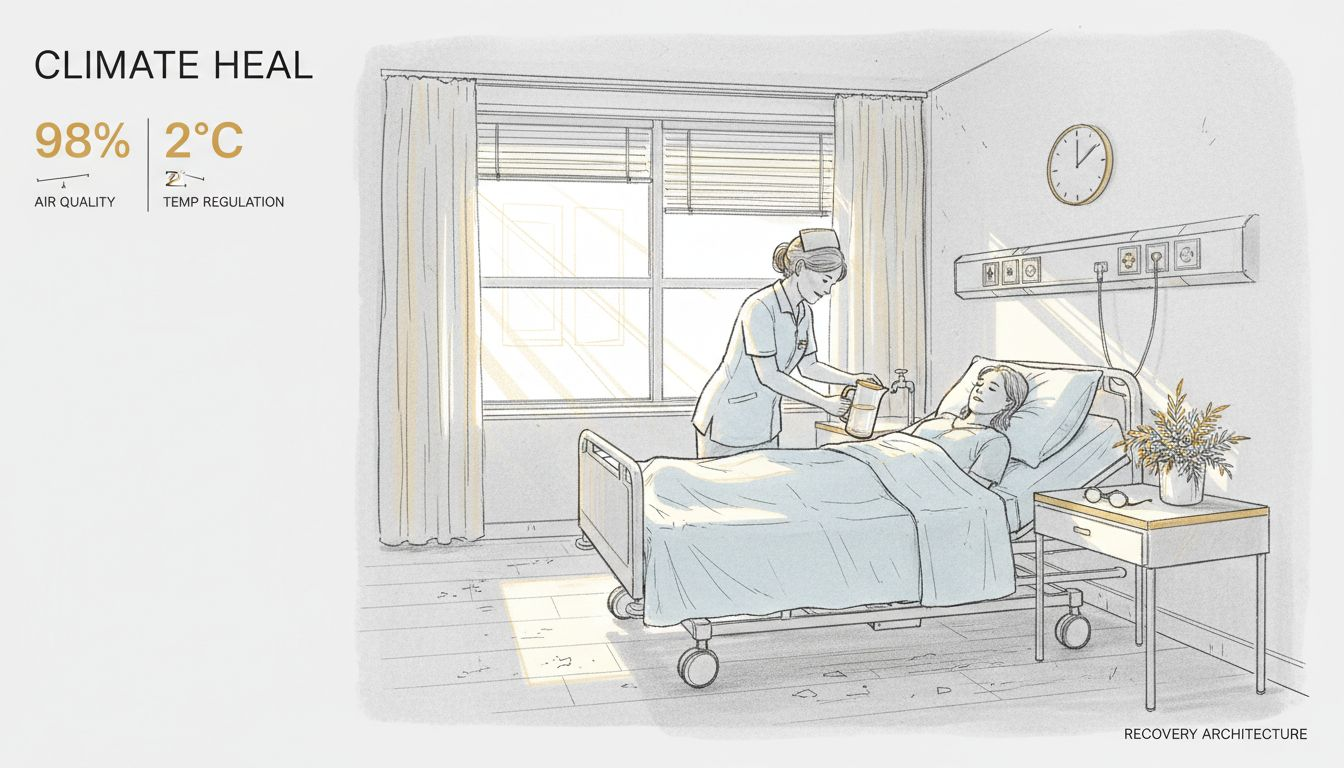
More than 85 percent of hospital spaces in British metropolitan areas lack sufficient natural daylight, directly impacting patient recovery rates and staff wellbeing. Urban healthcare environments face unique constraints, with dense building layouts reducing sunlight penetration. For healthcare facility managers and sustainable design architects, this challenge offers opportunities to rethink how daylighting can transform clinics, hospitals, and care centers worldwide. Discover strategies for assessing, designing, and optimising daylight systems that truly enhance healing spaces and elevate patient experience.
Table of Contents
Quick Summary
Key Insight | Explanation |
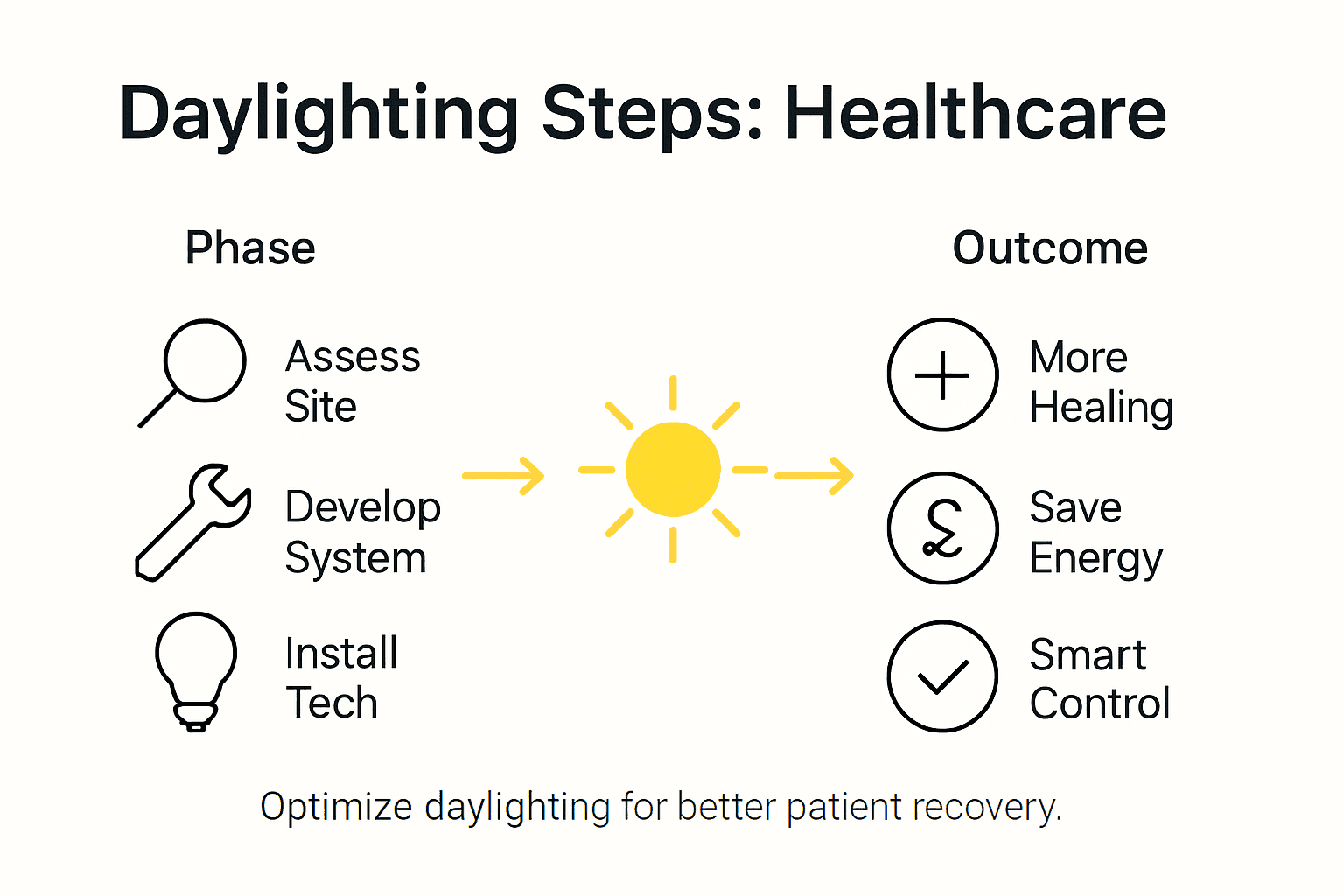
1. Assess Daylighting Potential Systematically | Conduct a comprehensive site analysis considering building orientation and architectural features to optimise natural light in patient areas. |
2. Develop Customised Daylighting Systems | Integrate patient needs and advanced technology to enhance healing environments while improving energy efficiency through tailored lighting solutions. |
3. Install Reflective Technologies for Sunlight | Use advanced materials like light pipes and smart glazing to effectively distribute natural sunlight throughout medical facilities. |
4. Integrate with Environmental Controls | Establish automated systems for monitoring and adjusting light and temperature, improving user comfort and overall facility performance. |
5. Verify and Optimise Daylight Performance | Implement a robust monitoring protocol to assess daylight impact on patients and staff, allowing for ongoing adjustments based on performance data. |
Step 1: Assess site daylighting potential and requirements
Assessing your healthcare facility’s natural daylighting potential requires a systematic approach that balances architectural design, patient needs, and environmental conditions. This comprehensive evaluation will help you understand how to maximise natural illumination while maintaining optimal healing environments.
Begin by conducting a thorough site analysis that examines building orientation, window configurations, and existing architectural features. Comprehensive simulation methodologies enable precise evaluation of daylight variables across different hospital spaces. Key factors include analysing geographic location, surrounding landscape, building height, adjacent structures, and potential shading elements that might obstruct sunlight. Measure existing window sizes, glass types, and calculate potential daylight penetration angles using professional solar path mapping tools.
Prioritise patient areas such as recovery rooms, rehabilitation spaces, and waiting zones when assessing daylighting potential. Space layout design variables significantly impact daylight provision and energy performance, so consider factors like room depth, ceiling height, and window placement. Utilise digital simulation software to model potential light distribution and understand how natural illumination will impact different hospital zones throughout various seasons.
Insider Recommendation: Consider engaging a specialised daylighting consultant who can provide precise computational analysis and recommend tailored solutions for your specific healthcare environment.
Step 2: Develop tailored daylighting system for healthcare
Developing a personalised daylighting system for healthcare environments demands a strategic approach that integrates architectural design, patient well-being, and technological innovation. Your goal is to create a lighting solution that enhances healing environments while optimising energy performance.
A holistic framework for balancing socio-spatial and energy performance is crucial when designing healthcare daylighting systems. Start by mapping your facility’s unique characteristics, including architectural layout, geographic orientation, and specific patient care requirements. Consider factors such as window placement, glass technology, reflective surfaces, and potential light redirection mechanisms. Collaborate closely with healthcare professionals to understand the precise lighting needs of different medical zones patient recovery areas, surgical spaces, and staff workstations each requiring nuanced illumination strategies.
Systematic review evidence from neuroscience highlights the importance of circadian-aligned lighting designs that support patient recovery and staff performance. Integrate advanced simulation tools to model potential light distribution, ensuring your daylighting system provides consistent, supportive illumination throughout varying times of day. Select materials and technologies that can dynamically adjust light intensity, minimise glare, and create healing environments that support natural biological rhythms.
Specialist Advice: Engage multidisciplinary experts including architects, lighting designers, and healthcare professionals to develop a comprehensive daylighting strategy that addresses clinical, operational, and environmental considerations.
Step 3: Install advanced reflective technology for sunlight entry
Installing advanced reflective technology transforms how natural sunlight enters healthcare environments, creating healing spaces that maximise patient well-being and operational efficiency. Your objective is to implement sophisticated light management systems that intelligently capture and distribute sunlight throughout medical facilities.
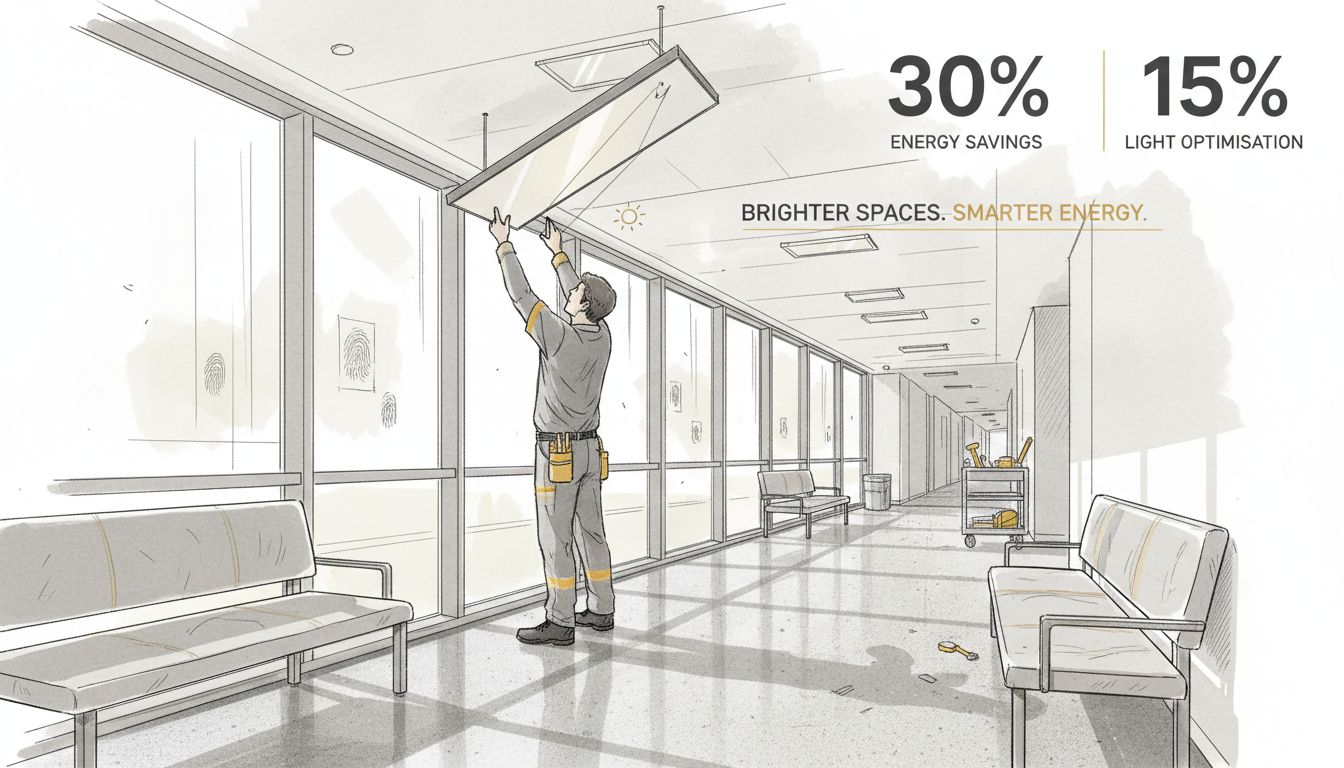
Comparative analysis of advanced daylighting technologies reveals multiple strategic approaches for efficient sunlight integration. Begin by selecting appropriate reflective technologies such as light pipes, optical fibres, or precision heliostats that match your specific architectural requirements. Carefully assess installation locations focusing on areas requiring consistent illumination like patient recovery rooms, rehabilitation centres, and staff workspaces. Consider factors including angle of solar reflection, material durability, thermal performance, and compatibility with existing building structures.
Dynamic solar glazing and intelligent light management solutions offer adaptable strategies for optimising natural light entry. Integrate smart glazing technologies that can automatically adjust light transmission based on time of day, weather conditions, and specific spatial requirements. Select materials with high solar transmission rates and minimal heat gain, ensuring comfortable visual environments that support circadian rhythms while maintaining energy efficiency.
Professional Recommendation: Consult specialised daylighting engineers who can perform precise computational simulations to validate your reflective technology integration strategy before final implementation.
The following table summarises key reflective daylighting technologies and their suitability for healthcare applications:
Technology Type | Best Use Case | Key Advantage | Potential Limitation |
Light pipes | Corridors, inner rooms | Distributes daylight deep indoors | Installation may require structural changes |
Optical fibres | Operating theatres | Flexible routing of sunlight | Higher initial cost |
Heliostats | Large atriums | Tracks sun for consistent light | Requires ongoing calibration |
Smart glazing | Patient rooms | Automated light control | Integration complexity |
Step 4: Integrate system with environmental controls
Integrating your daylighting system with sophisticated environmental controls transforms passive lighting infrastructure into an intelligent, responsive network that dynamically adapts to changing healthcare environment requirements. Your goal is to create a seamless interaction between natural light, artificial illumination, and building management systems.
Research demonstrates significant potential for combining daylighting with automated environmental controls to enhance patient care and energy efficiency. Implement sensors that continuously monitor natural light levels, ambient temperature, and occupancy patterns. Configure these sensors to trigger automated responses such as dimming electric lights when sufficient daylight enters the space, adjusting window transparency, and modulating heating or cooling systems to maintain optimal thermal comfort. Prioritise areas like patient rooms, rehabilitation spaces, and staff workstations where precise environmental management can directly impact well-being and productivity.
Bio-inspired adaptive systems offer advanced solutions for dynamic daylight management through innovative technologies like kinetic façades and electrochromic glazing. Select control systems with machine learning capabilities that can predict and respond to environmental changes in real-time. Ensure your integration strategy includes comprehensive data logging and performance analytics, enabling continuous refinement of your environmental control protocols.
Professional Recommendation: Engage building automation specialists who can help design a nuanced, responsive control system that balances human comfort, energy efficiency, and technological sophistication.
This summary outlines major factors and benefits of integrating daylighting systems with environmental controls:
Integration Factor | Description | Resulting Benefit |
Automated sensors | Continuously monitor light and occupancy | Enhances user comfort, saves energy |
Adaptive controls | Adjusts lighting and temperature automatically | Maintains optimal environment |
Data analytics | Tracks and evaluates system performance | Enables ongoing optimisation |
Step 5: Verify daylight performance and optimise outcomes
Verifying and optimising daylight performance is a critical final stage that transforms your technical implementation into a measurably effective healthcare environment. Your objective is to systematically assess how your daylighting system impacts patient recovery, staff productivity, and overall facility efficiency.
Field measurements and advanced simulation techniques provide comprehensive performance evaluation for healthcare daylighting systems. Deploy a multi-method assessment approach that includes quantitative light level measurements, occupant comfort surveys, and comparative analyses of physiological and psychological well-being indicators. Install calibrated illuminance sensors throughout patient zones, rehabilitation areas, and staff workspaces to collect precise data on light distribution, intensity, and temporal variations. Cross reference these measurements with patient recovery rates, staff productivity metrics, and energy consumption data to establish concrete performance benchmarks.
Comprehensive verification methodologies encompass computer aided simulations and physical scale modelling to validate daylight system effectiveness. Develop a robust monitoring protocol that includes seasonal performance tracking, allowing continuous refinement of your daylighting strategy. Implement adaptive feedback mechanisms that enable real-time adjustments based on collected performance data, ensuring your system remains responsive to changing environmental and occupational requirements.
Professional Recommendation: Establish a dedicated performance monitoring team that can interpret complex daylight performance data and translate technical insights into actionable improvements for your healthcare facility.
Enhance Healthcare Spaces with Advanced Daylighting Solutions
Natural daylighting plays a crucial role in boosting patient recovery and increasing operational efficiency in healthcare environments. This article highlights the importance of optimising daylight entry through advanced reflective technology, environmental controls, and system verification to create healing spaces that support circadian rhythms and reduce energy consumption. Many healthcare facilities face challenges such as balancing architectural constraints, patient needs, and energy performance—issues that require precise analysis and tailored interventions.
At LightMirror, we specialise in delivering innovative, sustainable daylighting systems tailored specifically for healthcare settings. Our proprietary reflective panels use advanced physics and AI algorithms to redirect natural sunlight deep into hospital interiors, enhancing patient wellbeing and staff productivity while significantly cutting artificial lighting and heating costs. Discover how our Healing Hill collection integrates seamless daylight optimisation with environmental controls to meet stringent green building standards like BREEAM and LEEDS. For pioneering solutions that transform healthcare facilities into naturally illuminated, energy-efficient healing environments, visit our Saaremaa lighthouse collection.
Ready to foster better recovery outcomes through natural daylighting technology? Explore our full range of services at LightMirror and take the first step towards a healthier, more sustainable healthcare infrastructure today.
Frequently Asked Questions
How can natural daylighting improve recovery in healthcare facilities?
Natural daylighting can enhance patient recovery by creating a calming environment that aligns with natural biological rhythms. To maximise these benefits, assess existing daylighting potential and consider optimising patient areas like recovery rooms and rehabilitation spaces within your design plan.
What factors should I consider when assessing daylighting potential for my healthcare facility?
Key factors include building orientation, window placement, and surrounding landscape features that affect light access. Conduct a thorough site analysis to measure existing window sizes and configurations to better understand how sunlight can be maximised in key patient areas.
How do I develop a tailored daylighting system for healthcare environments?
To create an effective daylighting system, collaborate closely with healthcare professionals to map the unique requirements of different spaces, such as surgical zones and patient rooms. Begin by selecting appropriate technologies like smart glazing and reflective surfaces, and utilise simulation tools to model light distribution.
What advanced technologies can be installed to enhance sunlight entry in healthcare settings?
Consider installing light pipes, optical fibres, or smart glazing to effectively capture and distribute sunlight. Each technology has specific advantages; for example, light pipes are excellent for distributing daylight deeply into corridors, while smart glazing offers automated light control for patient rooms.
How can I integrate my daylighting system with environmental controls?
Integrating your daylighting system with environmental controls involves setting up automated sensors that monitor natural light and occupancy levels. Implement these systems to adjust artificial lighting and climate for optimal patient comfort; aim for a seamless interaction that enhances overall environmental management.
What steps can I take to verify the performance of my daylighting system?
To verify daylight performance, conduct field measurements and collect data on light distribution and patient well-being. Establish a robust monitoring protocol to track performance over time, allowing for continuous optimisation based on observed results and feedback.
Recommended
Comments