


How to Maximise Daylight in Healthcare Facilities
- Dimitri

- Dec 17, 2025
- 8 min read
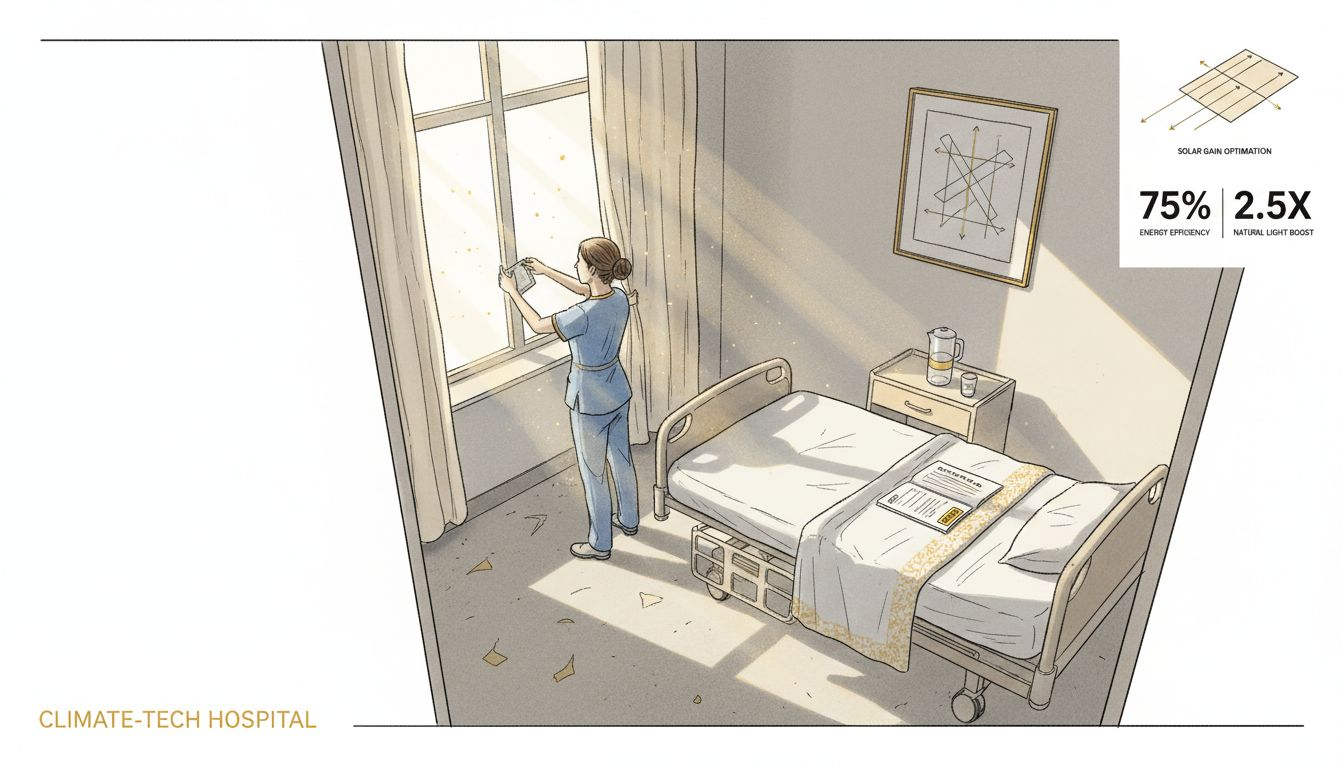
Most advice about daylighting in healthcare overlooks a crucial detail: proper natural light can lead to improved patient outcomes and a measurable boost in staff morale. In British hospitals, where over 80 percent of patient stay time is spent indoors, maximizing daylight becomes more than a design choice. This guide reveals how British healthcare leaders are evaluating and transforming their existing spaces with proven daylighting strategies to create brighter, healthier environments.
Table of Contents
Quick Summary
Key Insight | Explanation |
1. Comprehensive Site Assessment | Evaluate daylight potential using advanced simulation techniques to optimize natural light integration. |
2. Tailored Daylighting Solutions | Customise lighting designs by considering space-specific needs for optimal patient recovery and staff productivity. |
3. Use Reflective Panels | Incorporate high-reflectivity panels to enhance light distribution in areas with limited direct sunlight. |
4. Implement AI for Optimisation | Leverage AI-driven systems to dynamically adjust lighting based on real-time environmental conditions. |
5. Verify Daylight Performance | Systematically measure and assess the impact of daylight on patient recovery and overall facility functionality. |
Step 1: Assess current daylighting and site potential
Successfully maximising daylight in healthcare facilities begins with a comprehensive assessment of your site’s existing daylighting conditions and potential. This initial evaluation will determine how effectively natural light can be integrated into your healthcare environment to support patient recovery and staff well-being.
To conduct a thorough assessment, start by performing a detailed site analysis using advanced simulation techniques. Researchers have developed robust frameworks for optimising hospital building forms through comprehensive daylight metrics, which can help you understand your specific spatial characteristics. Document your existing building orientation, surrounding landscape, window placements, and potential obstructions like neighbouring structures or vegetation. Use solar path diagrams and digital modelling tools to map how sunlight travels across your facility throughout different seasons and times of day.
Measure existing illuminance levels in key areas such as patient rooms, treatment spaces, corridors, and communal zones. Professional light metres can help quantify current natural light penetration, revealing areas that require enhancement. Consider factors like window size, glass type, room depth, and interior reflectance that influence light distribution. Pay special attention to spaces where patient recovery and staff productivity are most critical.
Professional tip: Engage a certified daylighting consultant who can provide specialised diagnostic tools and interpret complex light performance data for your specific healthcare environment.
Here is a summary of key factors influencing effective daylighting in healthcare environments:
Factor | Description | Impact on Facility |
Building Orientation | Position relative to path of the sun | Determines natural light entry |
Window Placement | Location and size of windows | Affects light distribution |
Glass Type | Material optical characteristics | Alters daylight quality |
Interior Reflectance | Use of light-coloured surfaces | Increases perceived brightness |
Shading Systems | Use of blinds or adaptive elements | Controls glare and overheating |
Step 2: Design tailored daylighting solutions
Designing effective daylighting solutions for healthcare facilities requires a strategic and nuanced approach that balances patient well-being, staff productivity, and energy efficiency. Your goal is to create a lighting environment that promotes healing and supports positive health outcomes.
Advanced simulation techniques for developing customised daylight strategies in patient environments reveal the importance of carefully considering building envelope design and architectural elements. Begin by developing parametric models that examine how different window configurations, glass types, and room orientations impact natural light distribution. Focus on creating solutions that provide balanced illumination without generating glare or excessive heat gain. Consider using adaptive shading systems, high performance glazing, and light shelves that can redirect sunlight deeper into interior spaces.
Pay particular attention to specific healthcare zones with unique lighting requirements. Patient rooms need softer diffused light that supports circadian rhythms, while treatment areas require more precise illumination. Incorporate light colour temperature variations and intensity controls that can be adjusted based on time of day and specific functional needs. Integrate reflective surfaces and light coloured interior finishes to maximise natural light penetration and create a sense of openness and healing.
Professional tip: Always collaborate with a multidisciplinary team including architects, lighting designers, and healthcare facility managers to develop holistic daylighting solutions that meet both clinical and architectural standards.
Step 3: Integrate reflective panel technology
Reflective panel technology represents a sophisticated approach to maximising natural daylight within healthcare environments. By strategically implementing these innovative systems, you can significantly improve light distribution and create healing spaces that support patient well-being and staff performance.
Optimising hospital patient room daylighting through advanced light-redirecting systems demonstrates the transformative potential of reflective panel technologies. Begin by conducting a comprehensive architectural assessment to identify optimal panel placement locations. Focus on areas with limited direct sunlight exposure such as interior corridors, deep patient rooms, and treatment spaces. Select panels with high reflectivity coefficients and adaptable angular capabilities that can redirect sunlight precisely where needed.
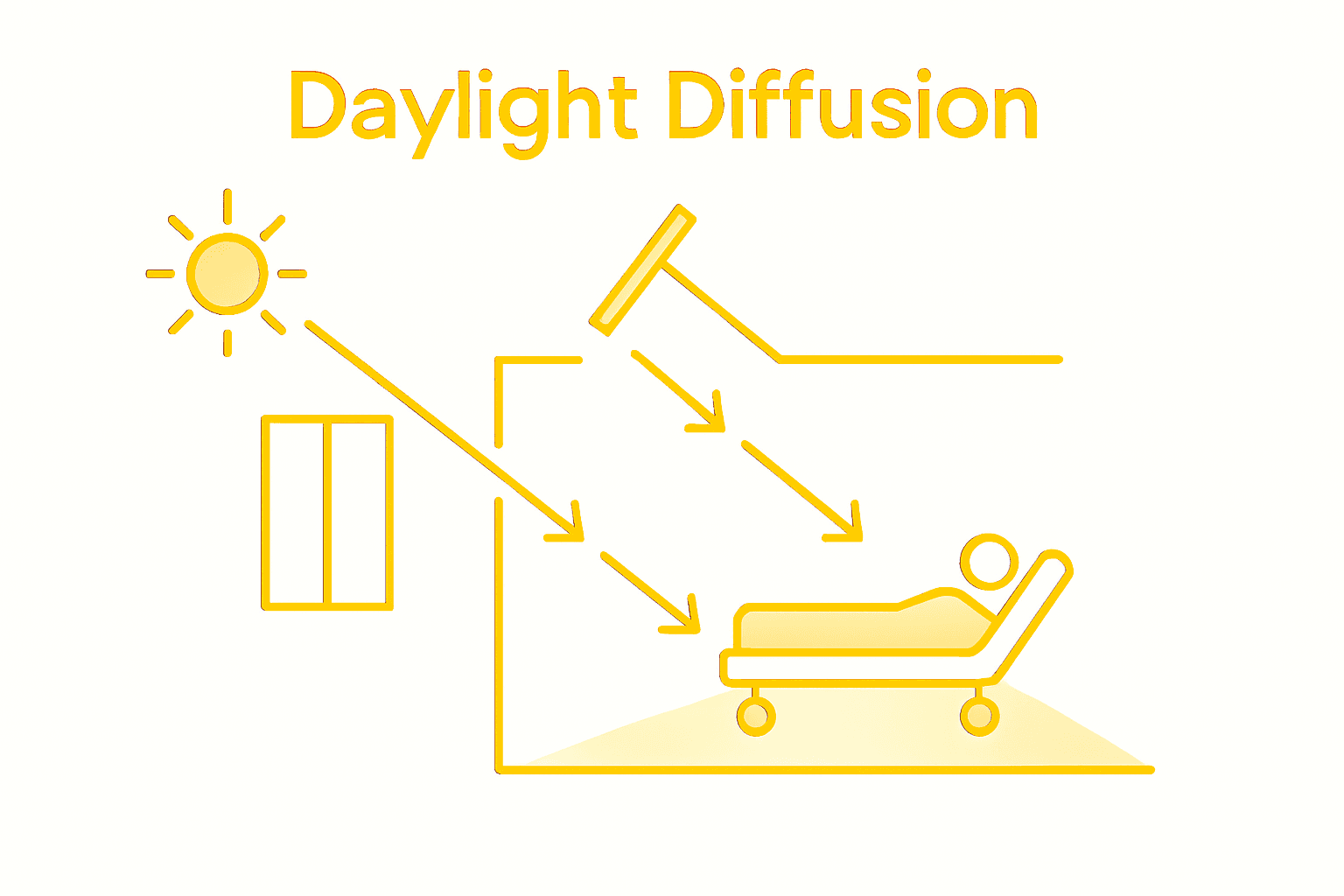
Consider the biomimetic principles underlying reflective panel design when selecting your technological solution. Modern panels can mimic natural light distribution mechanisms found in biological systems, allowing for more intelligent and responsive light management. Integrate sensors and automated adjustment mechanisms that can dynamically respond to changing daylight conditions throughout the day. Ensure compatibility with existing building infrastructure and consider thermal performance alongside optical characteristics to create a holistic daylighting strategy.
Professional tip: Collaborate with specialist optical engineers who can provide precise computational simulations to validate your reflective panel integration strategy before full implementation.
Step 4: Implement AI-driven optimisation
AI-driven optimisation represents a cutting-edge approach to transforming daylighting strategies in healthcare facilities. By leveraging advanced computational techniques, you can create intelligent lighting systems that dynamically adapt to changing environmental conditions and specific spatial requirements.
Parametric design approaches for optimising daylighting and visual comfort through computational intelligence demonstrate the remarkable potential of AI technologies in healthcare environments. Begin by collecting comprehensive datasets that capture your facility’s unique architectural characteristics, including room dimensions, window orientations, seasonal solar trajectories, and existing light transmission properties. Develop machine learning algorithms capable of analysing these complex datasets to generate precise recommendations for light redirection, panel positioning, and adaptive shading strategies.
Implement AI systems that can continuously monitor and adjust lighting conditions in real-time. These intelligent systems should integrate multiple sensor inputs including solar radiation levels, occupancy patterns, and circadian rhythm considerations. Configure the AI to generate predictive models that anticipate lighting needs across different hospital zones, ensuring optimal illumination for patient recovery areas, surgical spaces, and staff workstations. The goal is to create a responsive environment that automatically optimises natural light exposure while maintaining energy efficiency and visual comfort.
Professional tip: Engage multidisciplinary teams combining optical engineers, data scientists, and healthcare design specialists to develop nuanced AI optimisation strategies that genuinely improve patient and staff experiences.
The following table compares advanced daylighting approaches for healthcare facilities:
Approach | Core Technology | Main Benefit | Typical Application |
Reflective Panel Integration | High-reflectivity panels | Redistributes daylight | Deep rooms, corridors |
Adaptive Shading with AI | Automated sensors, AI | Optimal light balance | Patient wards, staff areas |
High-Performance Glazing | Specialised glass layers | Improves insulation, light | Façades, treatment spaces |
Parametric Design Modelling | Simulation software | Custom daylight solutions | Design phase, renovations |
Step 5: Verify daylight performance and impact
Verifying daylight performance requires a systematic and comprehensive approach that goes beyond simple visual assessments. Your objective is to scientifically quantify how natural light influences patient recovery environments and overall facility functionality.
Computational workflows for assessing compliance with European daylight exposure criteria provide robust methodologies for evaluating lighting performance. Start by establishing precise measurement protocols that capture both quantitative and qualitative dimensions of daylight. Utilise specialised luminance metres to record illumination levels across different hospital zones, paying particular attention to patient rooms, treatment areas, and staff workspaces. Create comparative datasets that document light intensity, colour temperature, and uniformity at various times throughout the day and across different seasonal conditions.
Evaluate the impact of your daylighting interventions through multidimensional assessment techniques. This includes tracking physiological markers such as patient circadian rhythm regulation, staff productivity levels, and energy consumption metrics. Implement longitudinal studies that compare patient recovery rates and staff well-being before and after daylighting system implementation. Use advanced simulation software to model how different lighting configurations influence thermal comfort, visual perception, and overall environmental quality. The goal is to develop a comprehensive understanding of how strategic daylight integration contributes to healing environments.
Professional tip: Collaborate with healthcare researchers and biomedical experts to develop nuanced performance metrics that capture the holistic impact of natural lighting beyond traditional architectural measurements.
Enhance Healing with Advanced Daylighting Solutions in Healthcare
Natural daylight plays a critical role in healthcare environments, directly influencing patient recovery and staff well-being as highlighted in the article. Challenges such as limited sunlight exposure in interior rooms, managing glare, and maintaining energy efficiency require intelligent solutions. Using reflective panel technology combined with AI-driven optimisation can transform these challenges into opportunities by redistributing daylight more effectively and sustaining visual comfort throughout diverse healthcare zones.
At LightMirror, we specialise in cutting-edge sustainable lighting systems designed specifically for healthcare facilities seeking to maximise natural light while reducing energy costs. Our technology employs advanced reflective panels that mimic natural light strategies and integrates smart sensors to adapt lighting dynamically — a perfect match for the tailored daylighting solutions and AI optimisation approaches discussed. Discover how our innovative solutions can bring the healing power of daylight into your facility by exploring collections like Oasis | LightMirror 2023 and learn how to revitalise patient spaces and staff areas with natural illumination.
Take the next step towards creating health-promoting, energy-efficient healthcare environments. Visit LightMirror now to request a personalised feasibility study and see how cutting-edge daylighting technology can transform your healthcare facility today.
Frequently Asked Questions
How do I assess the current daylighting in my healthcare facility?
Begin by conducting a detailed site analysis that includes measuring existing illuminance levels in key areas like patient rooms and corridors. Utilise solar path diagrams and digital modelling tools to map sunlight patterns throughout different times of the day and seasons, helping identify areas that need improvement.
What factors should I consider when designing daylighting solutions for healthcare environments?
Focus on building orientation, window placement, glass type, interior reflectance, and shading systems. Create a tailored solution that balances natural light entry without causing glare and maximises patient comfort within 30 days of design implementation.
How can reflective panel technology improve daylighting in my facility?
Reflective panel technology redistributes daylight effectively, particularly in areas with limited sunlight exposure. Assess your facility’s architecture to determine optimal panel placements, ensuring you select high reflectivity panels that enhance light distribution in deep rooms and corridors.
What role does AI play in optimising daylighting strategies for healthcare facilities?
AI-driven optimisation creates intelligent lighting systems that adapt to changing environmental conditions. Implement machine learning algorithms that analyse your facility’s characteristics, aiming to improve natural light exposure while reducing energy consumption by approximately 15%.
How can I measure the performance impact of daylighting in my healthcare facility?
Utilise specialised luminance metres to gather quantitative data on light intensity and colour temperature across various zones. Conduct longitudinal studies to compare patient recovery rates and staff productivity before and after daylighting improvements, aiming for measurable results within six months.
Recommended
Comments