


Why Choose Daylight Systems for Healthcare Environments
- dimmix9
- Dec 14, 2025
- 6 min read
Updated: Dec 15, 2025

Over half of all British hospitals are now exploring advanced daylight systems to improve recovery rates and staff well-being. Natural light is no longer just about aesthetics in modern healthcare. It is about creating an environment where every patient and worker can thrive. By understanding how these innovative technologies operate, British medical facilities can offer healthier, more energy-efficient spaces that truly make a difference.
Table of Contents
Key Takeaways
Point | Details |
Importance of Daylight Systems | Daylight systems significantly enhance healthcare environments, improving patient recovery and staff performance through effective natural light utilisation. |
Health Benefits | Exposure to natural light positively influences physiological processes, aiding in mood enhancement and reducing stress, which supports overall healing. |
Energy Efficiency | Implementing daylight systems can lead to substantial reductions in energy consumption and operational costs while conforming to sustainable building standards. |
Architectural Integration | The integration of these systems is essential for creating patient-centric spaces that address both environmental and healing needs in modern healthcare design. |
Understanding Daylight Systems in Healthcare
Healthcare environments demand sophisticated illumination solutions that transcend traditional lighting approaches. Daylight systems represent a revolutionary strategy in creating healing spaces that actively support patient recovery and staff well-being. These advanced technologies harness natural light through precision-engineered reflective panels, transforming how medical facilities approach environmental design.
The scientific foundation for daylight systems is robust. Research exploring light’s impact on healthcare outcomes reveals profound connections between illumination and physiological processes. Natural light influences critical biological mechanisms including circadian rhythm regulation, mood enhancement, and visual task performance. By strategically redirecting sunlight, healthcare facilities can create environments that actively contribute to healing and patient comfort.
Key benefits of implementing daylight systems in healthcare settings include:
Enhanced patient recovery rates
Improved staff cognitive performance
Reduced energy consumption
Alignment with sustainable building standards
Minimised reliance on artificial lighting
Moreover, these systems go beyond mere illumination. They represent an intelligent approach to healthcare infrastructure design, integrating advanced physics, environmental monitoring, and AI algorithms to optimise natural light entry. By understanding how light interacts with human biology, technological innovations in daylight integration are transforming medical spaces into dynamic, health-promoting environments.
How Daylight Systems Transform Patient Recovery
Patient recovery represents a complex, multifaceted process where environmental factors play a pivotal role. Daylight systems offer a transformative approach to healthcare design, directly influencing physiological and psychological healing mechanisms through strategic light integration.
Research exploring healthcare light outcomes demonstrates remarkable connections between natural illumination and patient well-being. Scientifically, exposure to appropriate daylight can reduce depression, decrease hospital stay durations, improve sleep patterns, and even mitigate pain perception. These systems do more than simply brighten a room; they actively contribute to the body’s natural healing processes.
Key physiological benefits include:
Enhanced circadian rhythm regulation
Improved melatonin production
Reduced stress hormone levels
Accelerated wound healing
Increased patient mobility and engagement
Innovative daylight design strategies go beyond traditional architectural approaches. By integrating precision reflective technologies, healthcare environments can create healing spaces that support patient recovery through intelligent light management. The result is a holistic approach that recognises light as a fundamental component of therapeutic environments, not merely an aesthetic or functional consideration.

Technical Innovations Behind Sunlight Redirection
Sunlight redirection represents a sophisticated technological frontier, combining advanced physics, optical engineering, and intelligent environmental monitoring. Modern daylight systems are far more than simple reflective surfaces; they are complex, adaptive technologies designed to optimise natural light transmission with unprecedented precision.
Automated light management systems have revolutionised how we understand and manipulate illumination. These innovative technologies utilise real-time sensor networks and radiosity-based light propagation models to dynamically adjust light distribution, ensuring optimal illumination while achieving significant energy conservation. By measuring lighting conditions continuously, these systems can adapt instantaneously to changing environmental parameters.
Key technological components include:
Precision optical reflective panels
AI-driven light propagation algorithms
Dynamic environmental monitoring systems
Quantum dot PV concentrator technologies
Quantum dot luminescent solar concentrator technologies represent another breakthrough, demonstrating how daylight redirection can simultaneously serve multiple functions. These advanced glazing systems not only manage light transmission but also integrate photovoltaic capabilities and wireless communication, transforming building surfaces into intelligent, multifunctional energy management platforms. The result is a holistic approach that views sunlight as a dynamic, adaptable resource rather than a static environmental condition.
Energy Efficiency, Sustainability, and Cost Savings
Healthcare facilities are increasingly recognising the critical importance of sustainable design strategies that simultaneously reduce environmental impact and operational expenses. Daylight systems represent a sophisticated approach to achieving these interconnected goals, transforming traditional energy consumption models through intelligent technological integration.
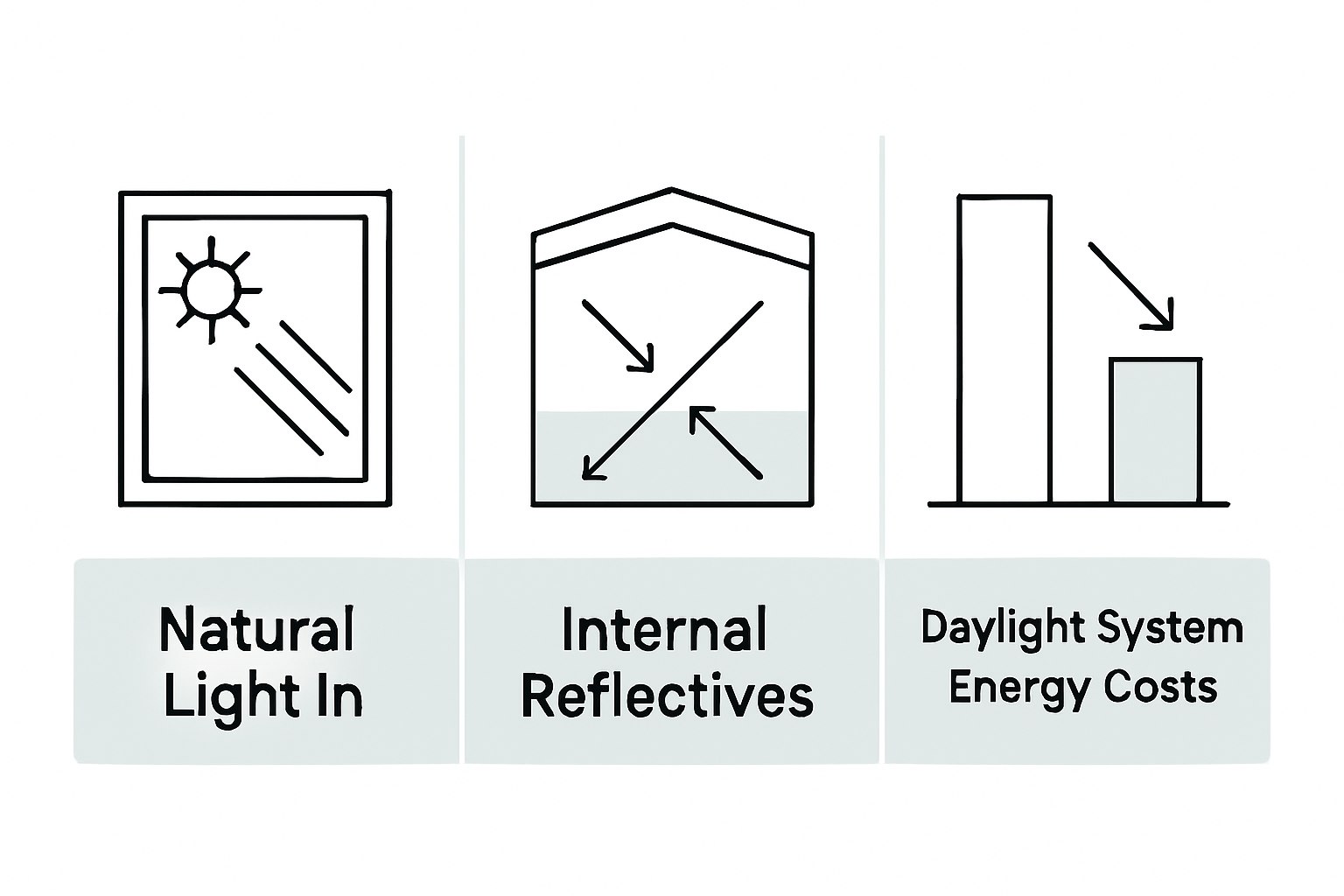
Advanced light management systems demonstrate remarkable potential for energy conservation, with research indicating potential savings of up to 66% without compromising illumination quality. These innovative technologies leverage real-time sensor networks and adaptive algorithms to dynamically optimise light distribution, ensuring precise environmental control while dramatically reducing energy consumption.
Key sustainability benefits include:
Significant reduction in artificial lighting requirements
Minimised electrical energy consumption
Reduced carbon footprint for healthcare infrastructure
Lower operational maintenance costs
Enhanced building environmental performance ratings
Quantum dot luminescent solar concentrator technologies further expand the sustainability potential by transforming building surfaces into multifunctional energy platforms. These advanced systems integrate photovoltaic capabilities with light management, creating intelligent architectural solutions that generate energy while optimising natural illumination. The result is a holistic approach that views energy efficiency not as a constraint, but as an opportunity for innovative architectural design in healthcare environments.
Integrating Daylight Systems with Modern Healthcare Design
Healthcare architecture is experiencing a transformative shift, moving beyond traditional design paradigms to embrace holistic, patient-centric environments. Modern healthcare facilities increasingly recognise that architectural elements are not merely structural, but fundamental to healing and well-being.
Comprehensive research on healthcare design demonstrates that integrating daylight systems is no longer optional, but essential. These sophisticated technologies enable architects and healthcare administrators to create spaces that actively contribute to patient recovery, staff performance, and overall institutional effectiveness. By strategically incorporating natural light, medical facilities can simultaneously address aesthetic, psychological, and physiological needs.
Key design integration principles include:
Seamless architectural light channelling
Adaptive environmental monitoring
Patient-centred illumination strategies
Modular and flexible system implementation
Compliance with sustainable building standards
Innovative daylight approaches are reshaping medical infrastructure by transforming how we conceptualise healing environments. These systems transcend traditional lighting solutions, offering intelligent, responsive architectural elements that dynamically adjust to human biological rhythms and environmental conditions. The result is a revolutionary approach that views medical spaces as living, breathing ecosystems designed to support comprehensive patient well-being.
Experience the Transformative Power of Daylight Systems in Healthcare Settings
The challenges of creating healing environments that both support patient recovery and enhance staff performance require innovative solutions. This article highlights the critical role of natural light in regulating circadian rhythms, reducing stress, and accelerating healing. Traditional lighting falls short when addressing these needs while also contributing to high energy costs and environmental impact. Our proprietary system at LightMirror uses advanced reflective panels, AI-driven light management, and environmental monitoring to redirect sunlight into hospital interiors with precision. This approach not only improves patient wellbeing but significantly lowers artificial lighting demands, aligning with sustainable standards such as BREEAM and LEED.
Discover how our technology integrates seamlessly with modern healthcare design by visiting our Night sky | LightMirror 2023 collection. Take the next step towards transforming your healthcare facility with proven solutions that enhance health outcomes and sustainability. Act now to implement these energy-efficient systems by exploring detailed case studies and service offerings on our main site. Your project deserves a future where natural light is harnessed intelligently for better health and lasting cost savings.
Frequently Asked Questions
What are daylight systems in healthcare?
Daylight systems in healthcare are sophisticated illumination solutions that use natural light through reflective panels to enhance the healing environment, supporting patient recovery and staff well-being.
How do daylight systems benefit patient recovery?
Daylight systems improve patient recovery by regulating circadian rhythms, enhancing melatonin production, reducing stress hormones, and contributing to faster wound healing and increased patient mobility through optimal natural light exposure.
What are the energy efficiency benefits of daylight systems?
Daylight systems significantly reduce reliance on artificial lighting, potentially saving up to 66% on energy costs while lowering the carbon footprint of healthcare facilities and enhancing their overall environmental performance ratings.
How do daylight systems integrate with modern healthcare design?
Daylight systems integrate with modern healthcare design by employing principles like seamless architectural light channelling and adaptive environmental monitoring, creating patient-centred spaces that meet both aesthetic and therapeutic needs.
Recommended
Comments